

📅 Updated June 22, 2026
Key Takeaways
- Never grind grease, coffee grounds, eggshells, pasta, potato peels, fibrous vegetables, bones, or non-food items in a garbage disposal.
- Run cold water before, during, and after every use so fats stay solid and flush down the line instead of coating the pipe.
- Clean the unit monthly with ice and salt, vinegar, and a toothbrush scrub of the rubber splash guard to stop odors at the source.
- A garbage disposal that hums but will not spin is jammed, not broken. A hex wrench in the slot on the bottom frees it in seconds.
- Most disposals last 10 to 12 years. A bottom-housing leak or a motor that hums without grinding means replace, not repair.
- If the sink gurgles, backs up, or smells after cleaning, the real problem is usually a clog deeper in the drain. Call a plumber.
The short answer is simple: never put grease, coffee grounds, eggshells, fibrous vegetables, pasta, bones, or fruit pits down a garbage disposal, run cold water every time you use it, and clean it about once a month. Do that and the garbage disposal grinds quietly for a decade. Ignore it and you are looking at a jam, a smelly sink, or a clogged garbage disposal that needs a plumber.
This guide covers the full list of things you should never put down the garbage disposal, what you safely can, how to clean it and stop the odor, how to fix a jam or clog yourself, and when a unit is worth repairing instead of replacing. Everything here comes from clearing these in Kansas City kitchens, not from a spec sheet.
A garbage disposal feels nearly indestructible, but it is a small motor turning a spinning plate, not a wood chipper. It grinds soft food into bits small enough to wash through your pipes. The trouble starts when something goes in that it cannot break down, because the leftover bits settle in the trap just past the garbage disposal and harden into a clog.
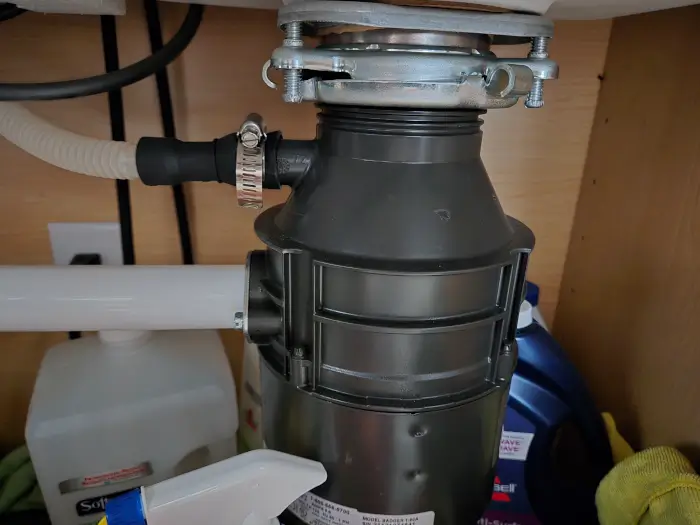
How a Garbage Disposal Actually Works
Knowing what happens below the sink makes every rule on this page click. A garbage disposal does not have blades. It has a spinning plate called a flywheel with two blunt metal impellers on top. When you flip the switch, the flywheel spins fast and centrifugal force throws the food against a stationary grind ring around the edge. That ring is what actually shreds the scraps into bits small enough to wash down the drain.
That design explains the whole list above. Hard items jam the flywheel, and stringy ones wrap the impellers. It is also why a garbage disposal that hums without spinning is almost always just stuck, not dead. Most home units run between one third and one horsepower, and a stronger motor simply bogs down less on a heavy load. Nothing in there is sharp, so a garbage disposal relies on speed and that grind ring, not a cutting edge, to break food down.
11 Things You Should Never Put Down the Garbage Disposal
Here is the full list of what to keep out. Most of these either harden, swell, or wrap around the moving parts. When you are not sure, the trash can is always the safer choice for your garbage disposal.
1. Grease, Oils, and Fats
This is the worst offender. Hot bacon grease pours like a liquid, then cools into a waxy solid that coats the chamber and the pipe wall. It is the single most common cause of sewer blockages, and a disposal does nothing to stop it. Johnson County’s wastewater program puts it plainly: home garbage disposals do not keep grease out of the sewer system. Pour cooled grease into a can and throw it away.
2. Coffee Grounds
Grounds look harmless going down, but wet coffee grounds clump into a dense sludge that packs into the trap. They are one of the fastest ways to build a hidden blockage. Compost them or toss them in the trash instead.
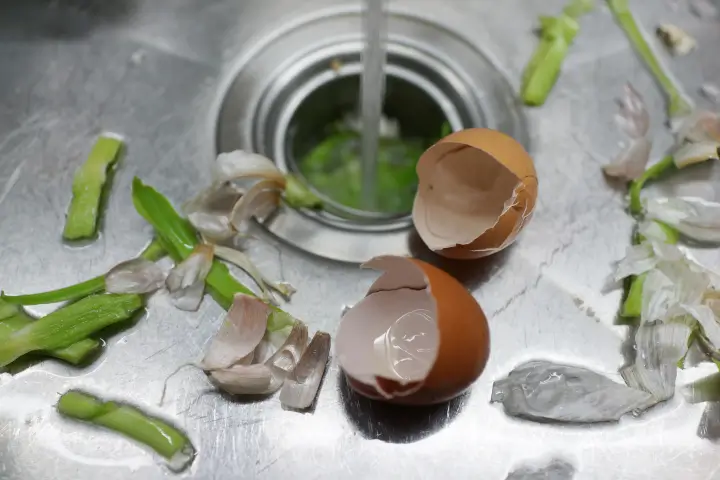
3. Eggshells
The myth that eggshells sharpen the blades will not die. A garbage disposal has no blades, just blunt impellers, and shells grind into a sandy grit that settles in the bend below the unit. The thin inner membrane can also wrap around the moving parts.
4. Pasta, Rice, and Bread
Anything starchy keeps swelling as it sits in water, even after it is cooked. Ground up, it turns into a gummy paste that expands inside the pipe and grabs onto everything else passing through. Keep the carbs out of the garbage disposal.
5. Potato Peels and Flour
Potato peels and flour both turn into a starchy glue the moment they get wet. A pile of peels slips right past the grind and cements itself into the trap. This is the one that catches people every holiday.
6. Fibrous Vegetables
Celery, corn husks, asparagus, artichokes, onion skins, and carrot peels all have long strings that wrap around the impellers like thread on a spool. They jam the unit and strain the motor. The rule of thumb: if it feels like you could floss with it, it does not belong in the garbage disposal.
7. Bones and Fruit Pits
Hard, round items do not grind. They bounce around the chamber, chip the impellers, and can crack the housing over time. Peach pits, avocado pits, and chicken bones all belong in the trash, not the sink.
8. Nuts and Shells
Grind a handful of nuts and you have basically made nut butter. That sticky paste coats the inside of the garbage disposal and the pipe behind it. Shellfish and nut shells are hard and abrasive on top of that.
9. Non-Food Items
The name fools people. A garbage disposal handles food scraps, not actual garbage. Paper towels, produce stickers, twist ties, wrappers, and so called flushable wipes all snag the parts or jam the chamber. Nothing non-food should ever go in.
Here is the same information at a glance, including the items that are fine and the few that call for caution.
| Item | Verdict | Why |
|---|---|---|
| Soft food scraps with cold water | Safe | Grinds small and flushes cleanly |
| Small strip of citrus peel | Caution | Fine for scent, not in bulk |
| Grease, oils, and fats | Never | Hardens into a rock-like clog |
| Coffee grounds | Never | Clump into a dense sludge |
| Eggshells | Never | Grind into grit that settles in the trap |
| Pasta, rice, and bread | Never | Swell and turn into a paste |
| Potato peels and flour | Never | Form a starchy glue |
| Fibrous vegetables | Never | Wrap around the impellers and jam the motor |
| Bones and fruit pits | Never | Chip the impellers or crack the housing |
| Non-food, paper, and wipes | Never | The unit is not built to grind them |
If you want the short version of what causes the most trouble, these are the repeat offenders we pull out of clogged lines, ranked by how often they are to blame.
Top garbage disposal killers, ranked by how often they cause the clogs and jams we get called for.
What You Can Safely Put Down a Garbage Disposal
The list of don’ts is long, so here is the reassuring part. A garbage disposal handles most soft food scraps without complaint, as long as you run it correctly. Small bits of soft leftovers, fruit without pits, cooked vegetables that are not stringy, and the rinse off your plates are all fine.
The single most important habit is cold water. Run a steady cold stream before, during, and for about fifteen seconds after you grind. Cold keeps any fat solid so it chops up and flushes instead of smearing the pipe. Hot water does the opposite, so save it for cleaning. Feed scraps in a little at a time rather than packing the chamber full, and let the unit finish grinding before you shut it off.
How to Clean a Garbage Disposal and Keep It Fresh
A garbage disposal that smells is not broken, it is dirty. Food film builds up on the grind ring, the pipe, and especially the rubber splash guard, and the bacteria feeding on it are what you smell. Cleaning it is quick, and doing it monthly is the difference between a fresh sink and one that greets you every morning.
Skip the chemical drain cleaners. They degrade the rubber and seals inside the unit and rarely fix the real problem. Reaching for them is one of the more common drain cleaning mistakes we see. Natural methods clean a garbage disposal better and cost almost nothing.
| Method | How to do it | How often |
|---|---|---|
| Cold water flush | Run cold water while grinding and for 15 seconds after | Every use |
| Ice and rock salt | Drop in a cup of ice and a few tablespoons of salt, run with cold water | Weekly |
| Vinegar ice cubes | Freeze vinegar in a tray and grind a few cubes | Monthly |
| Baking soda and vinegar | Pour in baking soda, then vinegar, let it foam, flush with cold water | Monthly |
| Scrub the splash guard | Lift each flap and scrub the underside with a toothbrush and dish soap | Monthly |
| Citrus peel for scent | Grind a small thin strip of lemon or orange peel | As needed |
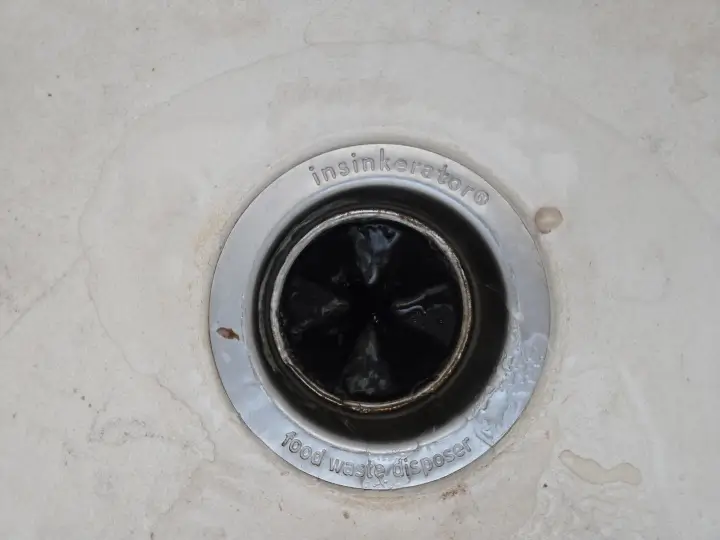
If your garbage disposal smells even after you run it, the rubber splash guard is almost always the culprit. Flip up each flap and scrub the underside with an old toothbrush and a drop of dish soap. That hidden surface holds more gunk than the grinding chamber itself, and most people never touch it.
Cleaned it and it still smells, drains slow, or hums without grinding? Some problems are past a DIY fix. Call John the Plumber at (816) 708-2020 and we will get your kitchen sink working again.
Warning Signs Your Garbage Disposal Is Failing
A garbage disposal rarely quits without warning. Catch these signs early and you can fix a small problem before it turns into a leak under the cabinet or a backed up sink.
Watch for a smell that returns within a day of cleaning, which means buildup deeper than the splash guard. A garbage disposal that trips its reset button again and again is straining a tired motor. Water pooling under the sink points to a leaking seal or housing. Grinding that has turned slow, loud, or rattly usually means worn impellers or a loose part. A disposal that keeps shutting off mid grind is telling you the motor is overheating under normal use. And a unit you have to nudge or reset just to start is on its way out.
One of these now and then is normal wear. Several at once, or any leak from the bottom of the garbage disposal, is the point to stop guessing and have it looked at before it fails for good.
How to Fix a Jammed or Clogged Garbage Disposal
Two different problems get blamed on a dead disposal, and they have very different fixes. A unit that hums but will not spin is jammed. A unit that runs fine but backs water up into the sink has a clog downstream. Here is how to handle each one safely, because a disposal combines water, electricity, and a motor.
Freeing a Jam
A jam is usually a fast fix, and the unit is rarely actually broken. Most of the time something hard slipped in and stopped the flywheel. Work in this order.
- Turn the disposal off and unplug it, or shut off its breaker. Never put your hand in the chamber.
- Look inside with a flashlight. Use tongs or needle nose pliers to pull out anything you can see, like a bone, a pit, or a stray utensil.
- Find the small hex slot in the center of the bottom of the unit. Fit a quarter inch Allen wrench into it and rock it back and forth until it spins a full turn freely. That breaks the jam at the flywheel.
- Press the small red reset button on the bottom of the unit if it has popped out.
- Restore power, run cold water, and test it.
Clearing a Clog
If the motor spins but water pools in the sink, the blockage is past the unit, usually in the P-trap just below or a little further down the line. Do not use a chemical opener here. With the power off, you can disconnect and clean the P-trap, or run a small hand snake through the trap arm. A clogged garbage disposal that keeps backing up after that points to a problem deeper in the line, and professional drain cleaning is the real fix.
What a Gurgle or Bubble Actually Means
If your sink gurgles, the disposal burps air, or another drain bubbles when the unit runs, the disposal itself is probably fine. That sound is trapped air escaping past a partial blockage or a venting problem deeper in the system, and no amount of cleaning the unit will fix it. Watch for the silent signs of a drain clog, and when a few of them show up together it is time to call a plumber.
Garbage Disposal Repair vs Replacement
Most disposals last 10 to 12 years, and some stainless models stretch to 15. When one acts up, the repair or replace decision comes down to age, the exact problem, and cost. The plumber’s rule of thumb: if the repair runs more than about half the price of a new unit and the garbage disposal is past 8 years, replace it.
Jams, simple clogs, a tripped reset, and a leak at a connection are usually worth repairing. A leak from the bottom housing, a motor that hums but never grinds after you clear a jam, a cracked or rusted body, or a unit that trips its reset over and over all mean the garbage disposal is done. If it is time for a new one, a plumber can install the replacement and seal the connections so it does not leak under the cabinet.
| Problem | Repair or replace | Typical Kansas City cost |
|---|---|---|
| Jammed, hums but will not spin | Repair | $0 to $150, often DIY |
| Simple clog backing up the sink | Repair | $100 to $275 |
| Leak at a hose or flange connection | Repair | $75 to $200 |
| Will not turn on after a reset | Check | $75 to $200 to diagnose |
| Leak from the bottom housing | Replace | $150 to $550 installed |
| Hums but never grinds (motor) | Replace | $150 to $550 installed |
| Over 10 years with repeat issues | Replace | $150 to $550 installed |
Ranges reflect common 2026 pricing for the Kansas City area. Emergency and after hours calls can add 1.5 to 2 times the standard rate.
One honest note. A budget garbage disposal is cheap, but the install is where a bad job shows up later as a slow drip under the cabinet. Matching the horsepower and sealing the connection are what keep a new garbage disposal quiet and dry for years, which is why a straight swap is worth doing right.
Keep Your Kansas City Kitchen Flowing
Owner and master plumber John Hunt has kept Kansas City kitchens running for over 30 years. Whether your disposal is jammed, leaking, smelling, or backing up the sink, we fix the cause, not just the symptom, with honest pricing and same or next day service across the metro.
Treat a garbage disposal right and it is one of the most reliable tools in your kitchen. Keep grease, fiber, and hard items out, run cold water, clean it monthly, and free a jam with a hex wrench before you panic. The same care keeps the rest of your kitchen plumbing clear, so it is worth a minute to protect your drains too. When a problem is bigger than a wrench, we are a call away.
Garbage Disposal FAQs
Quick answers to the questions Kansas City homeowners ask us most about using, cleaning, and fixing a garbage disposal.
What should you never put down a garbage disposal?
Keep grease, coffee grounds, eggshells, pasta, rice, potato peels, flour, fibrous vegetables, bones, fruit pits, and any non-food item out of a garbage disposal. These harden, swell, or wrap around the parts and cause clogs. Stick to soft food scraps with plenty of cold water running.
How do I clean a smelly garbage disposal?
Run a cup of ice with a few tablespoons of rock salt and cold water to scour the chamber, then grind a small strip of citrus peel for scent. Once a month, scrub the rubber splash guard with an old toothbrush and dish soap, since that hidden flap holds most of the odor. Skip chemical cleaners.
Should I run hot or cold water with my garbage disposal?
Always use cold water. Run a steady cold stream before, during, and for about fifteen seconds after grinding. Cold keeps fats solid so they chop up and flush down the line instead of smearing the pipe. Hot water melts grease, which then cools and hardens into a clog further down.
Why is my garbage disposal humming but not working?
A hum with no grinding means the unit is jammed, not dead. Turn it off and unplug it, then fit a quarter inch Allen wrench into the slot on the bottom and rock it until it turns freely. Press the red reset button, restore power, and run cold water. Never put your hand in the chamber.
How long does a garbage disposal last?
Most garbage disposals last 10 to 12 years, and some stainless steel models reach 15 with good care. Avoiding grease and hard items, running cold water, and cleaning it monthly all extend its life. If a unit past 8 to 10 years needs a major repair, replacing it is usually the better value.
When should I call a plumber for my garbage disposal?
Call a plumber if the unit leaks from the bottom housing, hums but never grinds after you clear a jam, trips its reset over and over, or backs water up into the sink after you snake the trap. These point to a failed motor or a clog deeper in the line that needs professional drain cleaning.